Chinese
The production and application of metals have created the history of human civilization. Humans began using natural metals in the late Neolithic period, and by 3800 BC, artificially smelted bronze vessels appeared. Arsenium bronze vessels appeared in Iran and Mesopotamia in the Mesopotamian region, some of which also contained small amounts of nickel. Copper zinc alloys appeared in the Yellow River Basin of China during the late Yangshao Culture period from 4000 BC to 3000 BC. Starting from 3000 BC, the Bronze Age began, and copper tin alloys with a content of over 8% appeared in both the Two Rivers Basin and the Yellow River Basin in China. Bronze is an alloy of copper and tin. During the Shang Dynasty (1600-1046 BC) in China, bronze ware was widely used, which greatly promoted the economic, political, cultural, and artistic development of society and created a brilliant bronze culture in Chinese history. During the Shang and Zhou dynasties, metal became the peak of Chinese bronze ware. Metal refers to substances with special luster, good conductivity, thermal conductivity, certain strength, and plasticity, such as iron, titanium, and their alloys commonly used in the mechanical manufacturing industry, such as copper and aluminum. Elements with metallic properties are called metallic elements, and materials formed from or mainly composed of metallic elements and possessing general metallic properties are collectively referred to as metallic materials. Metal materials are widely used in various fields such as modern industry, agriculture, national defense, and science and technology. They are widely used in the manufacturing of various engineering components, mechanical equipment, mechanical parts, processing tools, instruments, and daily necessities. The reason why metal materials are widely used is due to their abundant material sources, simple production and processing, and superior performance compared to non-metallic materials.
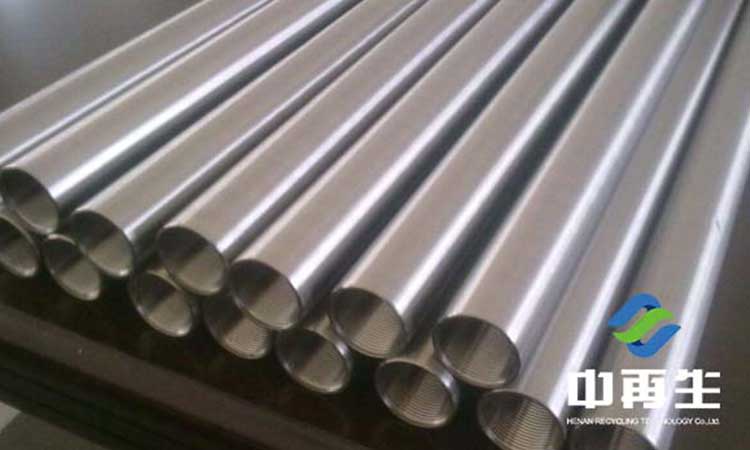
Metal materials are usually divided into two categories: black metal materials and non-ferrous metal materials. Car water tanks contain a large amount of copper aluminum materials, which are usually processed by copper aluminum water tank crushers to obtain metallic materials, such as iron, manganese, chromium, or substances with metallic properties formed mainly from them, called black metal materials. The important ones are pig iron and steel, such as carbon steel, alloy steel, cast iron, etc. Metal materials other than black metal materials are called non-ferrous metal materials, including various pure non-ferrous metals and alloy materials such as copper, aluminum, bearing alloys, etc. According to their composition, metal materials can be divided into two categories: pure metal materials and alloys. Pure metals are composed of a single metallic element, while alloys are substances with metallic properties based on one metallic element and composed of other elements (one or several metallic or non-metallic elements). According to the different degrees of processing of metal materials, they can be divided into two categories: smelting products and processed products. Smelting products refer to metal products that have been smelted and cast, such as pig iron, ferroalloys, and various non-ferrous pure metal ingots. Most of them cannot be directly used, but are used to prepare alloys or as raw materials for further processing. Processed products are metal materials made by pressure processing of metal smelting products, such as various profiles, bars, plates, pipes, etc., which can be directly used in the manufacturing of various products. In metal material management, smelting products usually refer to pure non-ferrous metal ingots, while processed products refer to non-ferrous finished products.